Monday, September 09, 2013

Work for money is no child’s play - IIPM Editorial

Mohan alias Chotu, a 15-year-old boy leaves home every morning like any other child of his age. He carries a lunch box and is rushing to make it in time; he fears punishment. Slightly less than 5 ft, Chotu in his half-pants and a pale sleeveless shirt – which fails to hide his malnourished structure – pauses before a school and then restarts for his destination, a bangle factory.
The rest stays inside the tall doors. Time and again, experts have debated the ‘key focus areas’ in order to eradicate child labour. Many state that poor economic conditions have led to a rational family strategy to send children to work and as their income increased, child labour decreased. But a contrasting explanation comes from Myron Weiner. He figures out in his study, ‘The Child and the State in India: Child Labor and Education Policy in Comparative Perspective’, that the answer lies in making primary education compulsory.

However, the unpleasant truth in India and many parts of the globe is that poverty, economic backwardness and illiteracy have robbed millions of children of their ‘basic rights’ that includes the right to education. India, though, has implemented the Right to Education Act, which provides for free and compulsory education, the bigger challenge remains to motivate children – who are already contributing to their family’s income – to pursue studies and excel. Thus, child labour negatively impacts their learning and future prospects. Besides, such children are frequent victims of maltreatment, physical and psychological abuse by their supervisors and even their family members.

Traditionally increase in child labour has been attributed to industrialisation, but this adverse practice has been there during pre-indutrialisation period too. However, it was only much later that it began to be linked with exploitation. Click here to read more...

Like us and read IIPM Think-Tank articles on facebook

Friday, July 26, 2013

The history of industrial relations in India dates back to pre independence and since then, it has gone through stages of evolution, both good and bad

The formation of the Bombay Mill Hands Association in 1890 can be called the starting point of the Indian labour movement, though it was not a trade union per se. The association aimed at bringing to the notice of government the grievances of the textile workers in Bombay. Taking a cue from this, a series of strikes followed all over India in the next few years:
? A strike by workers, anticipating wage cut, in three mills owned by K. M. Heeramaneck & Co.
? The first officially recorded strike in Ahmedabad took place in 1895 where workers of Ahmedabad Mill Owners’ Association protested against the introduction of fortnightly payment of wages instead of weekly wages.
? Budge Budge jute mills near Calcutta was closed for six weeks in 1895 and then for eight days in June 1896, though unsuccessful both times.
? Weavers in Bombay went on a strike in 1897 over discontinuance of daily payment of wages and reversion of old system of monthly wages.
? Signalling staff of GIP railways (central railways) went on a strike on May 6, 1899 demanding duty hours to be changed, increase in wages and non-discrimination between Indian and European employees.
? With introduction of electric light and proposition of extended working hours, there were strikes in 1905 in textile mills of Bombay.
? In August 1906, workers of British Clive Jute Mills went on a strike demanding better working conditions and protesting against humiliating behaviour of the management.
? The workers of Jacob Sasson Mills refused to report to work in February 1908, asking for increase in wages.

Thursday, March 14, 2013

It is imperative for teachers to be trained explicitly in the areas of moral development and value education

In another study on teacher training, teacher quality and student achievement, Douglas N. Harris (University of Misconsin-Madison) and Tim R. Sass (Florida State University) try to understand ways in which training affects the ability of teachers to promote student learning. Their findings suggest that experience greatly enhances the productivity of elementary- and middle- school teachers, and that advanced degrees are uncorrelated with the productivity of elementary schools teachers.

The use and application of technology is critical for success of teacher T&D programmes. It is important to introduce technology into schools to improve teaching and learning. And it is believed that failure to invest sufficient resources in teacher training will result in failure of school-based technology initiatives. At a time when conventional teacher-training programmes are not finding many takers, online training programmes are mushrooming.

WAC University, an online institution, has recently announced a new training programmes specifically designed for its online instructors, which will be delivered through webinars. WAC University will not only train its own faculty members through these webinars but training will also be offered to aspirants around the world. A study by Eduventures, a consulting firm in January 2012 that has studied online teacher training programs, found that principals are just as willing to hire from online programmes as from traditional ones. Click here to read more...

Read More IIPM Related Articles
Zee Business Best B-School Survey 2012
Prof. Arindam Chaudhuri's Session at IMA Indore
IIPM IN FINANCIAL TIMES, UK. FEATURE OF THE WEEK
IIPM strong hold on Placement : 10000 Students Placed in last 5 year
IIPM's Management Consulting Arm-Planman Consulting
Professor Arindam Chaudhuri - A Man For The Society....
IIPM: Indian Institute of Planning and Management
IIPM makes business education truly global
Management Guru Arindam Chaudhuri
Rajita Chaudhuri-The New Age Woman
IIPM B-School Facebook Page
IIPM Global Exposure
IIPM Best B School India
IIPM B-School Detail
IIPM Links
IIPM : The B-School with a Human Face

Thursday, February 07, 2013

The missing backbone of innovation

Q. Indian universities do not have a prominent presence on the global scale. What is lacking and what can be done?
A. What is lacking is quality research. Indian universities have a long way to go in terms of quality research. In the United States and Europe, a large number of universities have acquired stature and recognition, as they have produced Nobel laureates through years of research. Indian universities too need to deploy meaningful resources in quality research for global recognition.

Q. In India, the focus is more on placements and less on innovation in education. What reasons do you attribute to it?
A. Yes, in India the orientation is to go for well-paying jobs. Research and innovation needs a State support system that is unfortunately lacking. The population is large and stipend for research and innovation is either not there or is woefully inadequate than what a job could get.

Q. What are the areas where university and industry can interface for the benefit of students?
A. Both complement each other. Training and research at the universities in India help the industry grow and the practical experiences gained in the corporate sector help in fine-tuning the courses at the institutes. The areas of interface therefore straddle all the functions.

Q. How do you attract the best talent in academia and encourage teachers to embrace innovation and entrepreneurship?
A. At our institution, the spirit of innovation and entrepreneurship is highly valued. Our faculty is involved in several innovative projects. They are part of National Entrepreneurship Network and have also initiated the activities with TiE (The Indus Entrepreneurs) and CSBE (Council for Small Business & Entrepreneurship).

Further, we are doing a major project in collaboration with the University of Wales. This project has been funded by the British Council and is aimed at driving innovation in the SMEs; our faculty is attempting path-breaking work on enhancing their productivity. Click here to read more...

Read More IIPM Related Articles
Zee Business Best B-School Survey 2012
Prof. Arindam Chaudhuri's Session at IMA Indore
IIPM IN FINANCIAL TIMES, UK. FEATURE OF THE WEEK
IIPM strong hold on Placement : 10000 Students Placed in last 5 year
IIPM's Management Consulting Arm-Planman Consulting
Professor Arindam Chaudhuri - A Man For The Society....
IIPM: Indian Institute of Planning and Management
IIPM makes business education truly global
Management Guru Arindam Chaudhuri
Rajita Chaudhuri-The New Age Woman
IIPM B-School Facebook Page
IIPM Global Exposure
IIPM Best B School India
IIPM B-School Detail
IIPM Links
IIPM : The B-School with a Human Face

Monday, January 14, 2013

The factors keep changing at different levels of education.

Prof. Parvin Sinclair (Director, NCERT) says if one aspires to be a school teacher, one needs to empathise with children
 
Q. What will be the teacher-development methods?
A. National Council Of Educational Research And Training (NCERT) has formed National Council For Teacher Education (NCTE). It is a regulatory body that has created a set of norms in accordance to which it regulates and advises. It has also developed a curriculum framework for teachers, which is slowly being put in place. We have developed a BEd programme and offer a two-year internship, which is well-monitored without being intrusive. We are also starting an online teacher training programme.

As there are many untrained teachers – recruited to fill vacant posts – in-service education training has been in focus. Every state government is trying to deal with the demand of in-service teacher training.

We also find there are different people with different calibre in different states. Hence, teacher eligibility test (TET) was brought in; central teacher eligibility test (CTET) is for the central level and state-level teacher eligibility test (STET). Surprisingly, most people failed it. But, hopefully something better will come out of the experiments that have been frequently done over the years.

Q. What is the difference between India and the top-performing nations in the education sector ?
A. There can be no comparison with any country that has a population 1/100th of of India, spread out differently and has huge monetary resources. We cannot simply implement their best practices because the economical, social and geographic conditions are different. Instead, we can only try to customise and adapt those practices according to our requirements.

National Human Resource Developement (NHRD) has formed a national advisory committee council that has groups looking into curriculum in context of the RTE Act and how to get them in place with the states. The prime minister has his own advisory council that has a constant focus on education. Along with the SSA (Sarva Shiksha Abhiyan), RMSA (Rashtriya Madhyamik Shiksha Abhiyan) is also being developed. Click here to read more...

Read More IIPM Related Articles
Zee Business Best B-School Survey 2012
Prof. Arindam Chaudhuri's Session at IMA Indore
IIPM IN FINANCIAL TIMES, UK. FEATURE OF THE WEEK
IIPM strong hold on Placement : 10000 Students Placed in last 5 year
IIPM's Management Consulting Arm-Planman Consulting
Professor Arindam Chaudhuri - A Man For The Society....
IIPM: Indian Institute of Planning and Management
IIPM makes business education truly global
Management Guru Arindam Chaudhuri
Rajita Chaudhuri-The New Age Woman
IIPM B-School Facebook Page
IIPM Global Exposure
IIPM Best B School India
IIPM B-School Detail
IIPM Links
IIPM : The B-School with a Human Face

Monday, December 10, 2012

The readers’ guide

Mark Sanborn is an international bestselling author and noted authority on leadership and customer service. He has served as the president of the National Speakers Association and is one of the youngest speakers ever to be inducted into the Speaker Hall of Fame. Sanborn has authored eight books and nearly two dozen audio and video training programs including the bestselling books ‘The Fred Factor’, ‘You Don’t Need a Title to be a Leader’ and ‘The Encore Effect’. In 2007, Sanborn was awarded the Ambassador of Free Enterprise Award by Sales & Marketing Executives International.

Q. You delivered your first speech at the age of 10 and failed. While most people give up after their first failure, you took it as a challenge and turned your failure in to a success story. What was the inspiration behind this?
A. How we frame what happens to us in life matters. The difference between opportunity and obligation is perspective. I hate to lose. In the case of the speech competition, I saw losing as a challenge to improve, rather than a discouragement to quit. Interestingly, some people hide their disappointment in a setback or failure by saying “it doesn’t matter”. They pretend they do not care when in reality they care deeply. I think it is important to be clear on what is important to us personally and professionally and to use mistakes and disappointments to make us better.

Q. Many are convinced that leaders are born, not made. How true is this? With time how has this idea changed?
A. Leadership is a skill, and any skill must be learned and developed. Some people are born with a greater disposition to learn certain skills, but there is no automatic or effortless achievement of mastery of a skill. Think about field hockey. Anyone can learn to play the game, but some are born with a greater physical potential than others to play well, and only a few become superstars. Anyone can learn to lead, whether or not they have a title. Some people may have genetics that make leadership an easier skill to learn and excel at and a few become leadership superstars through a combination of hard work and their natural predisposition. Read more...

Read More IIPM Related Articles
Zee Business Best B-School Survey 2012
Prof. Arindam Chaudhuri's Session at IMA Indore
IIPM IN FINANCIAL TIMES, UK. FEATURE OF THE WEEK
IIPM strong hold on Placement : 10000 Students Placed in last 5 year
IIPM's Management Consulting Arm-Planman Consulting
Professor Arindam Chaudhuri - A Man For The Society....
IIPM: Indian Institute of Planning and Management
IIPM makes business education truly global
Management Guru Arindam Chaudhuri
Rajita Chaudhuri-The New Age Woman
IIPM B-School Facebook Page
IIPM Global Exposure
IIPM Best B School India
IIPM B-School Detail
IIPM Links
IIPM : The B-School with a Human Face

Monday, December 03, 2012

The people’s advocate

Bharti AXA General Insurance was undergoing a major change last year and there was a possibility of reshuffle in shareholders. Instead of being made aware by the company, the staff came to know about it through press reports. This could have raised quite a few challenges if not handled well. The first thing we did was to communicate openly about this to the staff, giving them all the details required. In addition, we set up regular communication and meetings with the staff on a pan-India basis to address any query from them and ensured normal execution of all operations. This had a positive impact on the staff and at the end of the year we had not just managed to meet all business targets but also saw an increase in employee satisfaction that we measure every year.

During economic slowdown or market turns, it is important that HR is involved during all boardroom discussions so that they are abreast of the situation and people become the integral part during the decision-making process. As a chief people’s officer, it is his or her responsibility to ensure and lead all employee communication for the organisation, be available 24/7 for answering queries and concerns, and to motivate during times of change.Communication is one important strategy during turnarounds and it should be transparent, factual and employee centric. This will ensure that there is no ambiguity and uncertainty in the minds of the employees. Also, the HR head needs to make sure the communication is factual and pragmatic – neither alarmist nor too optimistic for the organisation to maintain credibility in the eyes of its employees. Read more..

Read More IIPM Related Articles
Zee Business Best B-School Survey 2012
Prof. Arindam Chaudhuri's Session at IMA Indore
IIPM IN FINANCIAL TIMES, UK. FEATURE OF THE WEEK
IIPM strong hold on Placement : 10000 Students Placed in last 5 year
IIPM's Management Consulting Arm-Planman Consulting
Professor Arindam Chaudhuri - A Man For The Society....
IIPM: Indian Institute of Planning and Management
IIPM makes business education truly global
Management Guru Arindam Chaudhuri
Rajita Chaudhuri-The New Age Woman
IIPM B-School Facebook Page
IIPM Global Exposure
IIPM Best B School India
IIPM B-School Detail
IIPM Links
IIPM : The B-School with a Human Face

Monday, November 26, 2012

Banking up talent against the tide - IIPM Think Tank

Q. How do you see HR’S contribution to turnarounds?
A. HR plays a significant role in turnaround situations by creating and deploying people strategies. Such measures are influenced by the stage of evolution of the organisation and the continued challenges it faces. In Citi, we periodically conduct franchise wide skill inventory assessments, defining the competencies required to steer the organisation to the next level. The focus is to sponsor ‘responsible achievers’ who are result oriented and aligned to institutional objectives. This is achieved by promoting an environment conducive to positive change and clearly setting down role expectations. Such changes may be accomplished by supporting a culture of innovation and cost efficiencies where employees are encouraged to think and work on solutions that drive client excellence as a competitive advantage.

In one such initiative concluded recently at Citi, employees were encouraged to provide suggestions that would significantly drive efficiencies at lower costs. It included product and service innovations as well.

Q. Have you ever seen a turnaround situation closely?
A. Turnaround experiences are that of being nimble on the feet, thinking out-of-the-box and executing innovatively. Managing such situations is about understanding employee expectations and aspirations. In one such earlier assignment, I was required to manage extremely high attrition rates caused due to an uncertain business environment and a perception that specialised careers in ‘high-end technology’ can only flourish in an IT company. The announcement of a business restructuring exercise only accentuated the problem. Read more...

Thursday, November 22, 2012

HR-CEO MoU to Develop Human Capital - by IIPM Think Tank

Q. Which are the key areas where CEO expects HR to deliver? 
A. The CEO expects the HR to deliver majorly in the areas of talent acquisition; strategy and ideation; and skill development.  

Q. How can the CEO best communicate its expectations to HR? 
A. The CEO needs to set out priorities in consultation with business heads while understanding the employees’ needs, aspirations and expectations through engagement surveys, communication etc. Focus on business objectives is crucial but to meet the expectations of human capital by aligning them to the business goals is equally important. 

 Q. How can HR meet the expectations of human capital by aligning them to business goals? 
A. A career planning is needed for the employee. This pertains to the employee’s individual career goals and future objectives. With respect to the function he is performing he needs to be shown that kind of career, subject to his performance. This is called integration because the employee will e ventually be performing for the vertical he has been recruited for. Click here to read full interview..

Read More IIPM Related Articles
Zee Business Best B-School Survey 2012
Prof. Arindam Chaudhuri's Session at IMA Indore
IIPM IN FINANCIAL TIMES, UK. FEATURE OF THE WEEK
IIPM strong hold on Placement : 10000 Students Placed in last 5 year
IIPM's Management Consulting Arm-Planman Consulting
Professor Arindam Chaudhuri - A Man For The Society....
IIPM: Indian Institute of Planning and Management
IIPM makes business education truly global
Management Guru Arindam Chaudhuri
Rajita Chaudhuri-The New Age Woman
IIPM B-School Facebook Page
IIPM Global Exposure
IIPM Best B School India
IIPM B-School Detail
IIPM Links
IIPM : The B-School with a Human Face

Thursday, October 25, 2012

HR Guru

Connecting several thousand professionals across the globe, HR Guru aims to bring them together on a common platform and provide a forum for discussing persistent problems and finding solutions to their queries. HR Guru seeks to provide guidance to budding professionals in dealing with their daily work demands and providing a third party perspective to their situations and issues.

Job seekers can look for their dream jobs through the platform HR Guru provides and employers will find the right talent that they seek. The HR Guru page on Facebook also provides a medium for job hunters and employers alike, where the twain can meet and fulfill each other’s needs.

HR Guru, through its team of high calibre professionals and experts also provides valuable insights into the industry trends and recent researches, and keeps professionals abreast with the best practices in the corporate world.

Giving valuable inputs on people skills and providing the right guidance to professionals across the world, HR Guru is the voice of the people in the corporate world. Click here to Read full Interview...

Read More IIPM Related Articles
Zee Business Best B-School Survey 2012
Prof. Arindam Chaudhuri's Session at IMA Indore
IIPM IN FINANCIAL TIMES, UK. FEATURE OF THE WEEK
IIPM strong hold on Placement : 10000 Students Placed in last 5 year
IIPM's Management Consulting Arm-Planman Consulting
Professor Arindam Chaudhuri - A Man For The Society....
IIPM: Indian Institute of Planning and Management
IIPM makes business education truly global
Management Guru Arindam Chaudhuri
Rajita Chaudhuri-The New Age Woman
IIPM B-School Facebook Page
IIPM Global Exposure
IIPM Best B School India
IIPM B-School Detail
IIPM Links
IIPM : The B-School with a Human Face

Monday, October 15, 2012

Sangeeth Varghese

Sangeeth Varghese, who was nominated for the Young Leader Award at the World Economic Forum was the guest keynote speaker at Bengaluru. Verghese is an expert from LSE and the founder of LeadCap Ventures. The event progressed, and a session on global market research turned into an engrossing storytelling session as Verghese quoted both from The New York Times’ Adam Bryant’s “passionate curiosity” and Frans Johansson’s classic The Medici Effect. He masterfully linked it with the need for HR practitioners to learn from other disciplines like sales.

Then came the sales expert Bob Urichuck who enlightened the audience across both cities. As HR is always expected to understand, appreciate, and even learn from other functions, it was an opportunity to learn a few insights and important tools of the “people” function. “It is not the price that closes the sale. You will make the sale when your prospect feels certain that he/she is getting the best value for his/her money. Over 60 per cent of the salespeople are not using this simple strategy to succeed,” said Bob.

The programme had discussions on the lines of behavioural approach. Some of the topics that covered in the discussion were: Only person who can motivate you is yourself; work for your dream, work for your dream; success is the progressive realisation of goals; etc. Click here to read more...

Read More IIPM Related Articles
Zee Business Best B-School Survey 2012
Prof. Arindam Chaudhuri's Session at IMA Indore
IIPM IN FINANCIAL TIMES, UK. FEATURE OF THE WEEK
IIPM strong hold on Placement : 10000 Students Placed in last 5 year
IIPM's Management Consulting Arm-Planman Consulting
Professor Arindam Chaudhuri - A Man For The Society....
IIPM: Indian Institute of Planning and Management
IIPM makes business education truly global
Management Guru Arindam Chaudhuri
Rajita Chaudhuri-The New Age Woman
IIPM B-School Facebook Page
IIPM Global Exposure
IIPM Best B School India
IIPM B-School Detail
IIPM Links
IIPM : The B-School with a Human Face

Thursday, October 11, 2012

She Writes Story Contest winner: Santana Pathak

Santana Pathak is one of twelve winners of the MSN-Random House She Writes a Story Contest', as chosen by our judges. Her story 'Mirage' features in the 'She Writes: A collection of Short Stories' published by Random House India and available at all leading bookstores.


Santana Pathak is not a conventional female writer dogged by social norms and values. Growing up and studying ina North-eastern state and working in fields like academia and journalism in the pan-Indian layout, she has seen two different worlds dealing differently with common human values. This disparity has made her sensitive towards the complexities of life. It has also widened the horizon of her expectations and nothing surprises her. Her writings are born from thoughts that keep playing in her mind and feelings that touch her heart with each passing experience.


read an extract from santana pathak's story 'mirage'

Sitting on the edge of the small, concrete bridge, Monalisha was holding her lover's hand in silence. At such moments, she felt like humming an evening raga. A tinge of sadness descended on her mood instantly on realizing her ineptness in singing.

Monalisha cast a glance at Prashanta-his face was intent, as if in anticipation. So it was coming then, she smiled, and turned her head to see what he was looking at. A train had appeared in the distance as mysteriously as a vision, its movement slithery in the darkness, and yet alluring due to the square patches of light emanating from its windows. Like all evenings, today too her lover's face brightened at the sight of the approaching train, and both of them smiled at each other. Tightening the knot on their hands, they got up and started walking towards the small hill in front of them, with its languid chegun trees. It was one of the many hills that surrounded the lush green university campus where Prashanta and Monalisha studied.

Nestling on a green patch at the bottom of the hill, they observed the dance of the glowworms together. Their silence was occasionally pricked by a few men walking on the concrete street below, and a few stray lights from the passing cars that illuminated the otherwise deep, silvery dark.

She removed Prashanta's cap from his head, his perennial favourite, and ran her hand over his curly mop of hair. This always irked him and he jostled with her, trying to take the cap away from her hand. Their proximity was electric. Prashanta's breath was over her face, and the warmth melted her eyes.

She turned her face towards him and her lips met his, as his robust hands lifted her up against him, brushing aside the ivory skirt from her thighs. She hesitated for a moment, as always, but the warmth of his touch embraced her entire being. She gently slipped down his black shirt, revealing a bit of his sculpted shoulder. On his knees, hiding his face in her bare midriff, his sharp breath feathery warm on her flesh. Prashanta's rhythm was more moving than the music in her soul. Everything stood still, except the glowworms and his breath that kept rising like sea waves. She willingly surrendered her bosom to his meanderings, put her face on the cave of his shoulder, and mounted on a wave of joy, rising from the silence of the blue night to the ecstasy of the sea waves, and then to the silence again.

in her own words: santana pathak

Have you always been a writer? What made you start writing?
No. I have had a stint as a journalist, but that is very different from being a creative writer. Starting to write has something to do with all the shifting I have done in the past decade of my life, which have exposed me to lot of new experiences and people. The milieu also changes along with your uprooting of self. Faced with these, I have constantly been in a state of flux. Numerous incidents keep flooding my senses, and I keep groping in the dark looking to set meaning to them, or at least, trying to sort them out in my mind. Only recently I discovered that it is writing which gives me relief from this state.

What inspired you to enter She Writes?
Relentless insistence from "the man in my life." I believe he did sense my restlessness, and advocated the contest can be the catalyst to my experiences.

Why did you choose the category that you did?
Because all the men in my life remain my closest window to a world which I can experience only philosophically. It is intriguing and at times, baffling to know that despite the constant co-existence, so many things fall into perspective only when you look at that world through the eyes of that particular person.

Do you have a writing routine - e.g. do you have favourite places to write/favourite times of day/do you write longhand or on a computer?
I believe I am able to sort out my thoughts most effectively when I am taking a walk along a busy, throbbing street! I find myself repeatedly doing that. I have in fact written many initial drafts on a Blackberry sitting at roadside tea stalls.

Who is your favourite author?
Of course, it is impossible to list all. I had sought out my world through books since I was a child and have done a post-graduation in literature! But I seek company of a few all the time. Of Maxim Gorky and Chekov who turned me to a precocious child. Of Ernest Hemingway for making me understand how a simple line can be pregnant with resonances. And of late, of Haruki Murakami for his striking balance of the real with the illusory!

Which book has inspired you the most?
Lots of them. The lives captured in books inspire me the most. One such book would definitely be Steven Davis's Jim Morrison: Life, Death, Legend, through which I experienced the belligerent genius up, close and personal. I so wish I will garner the strength to burn the notebooks of my past and still have meaning enough to cling to, which Morrison so effortlessly did!

Which key piece of advice would you give to any other budding writer?
I cannot give an advice. But I would just like to share one experience. Writing can build a perspective into many things that leaves you unsettled in your existence, and when that happens, it is sheer bliss!

Wednesday, October 10, 2012

MTHR Organises Lectures on its 10th Anniversary Celebration

Continued... The events in Bengaluru (24th May) and Mumbai (27th May)
featured the renowned author and educational consultant, Tony Buzan, best known for his concept of ‘mind mapping’.

He shared some valuable insights into the workings of the human mind during the course of his lectures. He said that studies have shown that creativity of a human being is maximum (95+) when in standard KG, drops to 50 when in high school and plunges to 10 as an adult. He said that this is normal, and the natural course should be to make it rise back to its high school level.

Buzan also made some stark observations during his talks saying that the recession of 2008-09, where companies went bankrupt, was essentially due to bankruptcy of the mind. He also said that, whereas the age before year 1750 was Agrarian for 100 years, and the subsequent ones were Industrial, Information and Knowledge Ages, the one after 2007 and continuing is one of the Mind: the Intelligence Age. Read More

Monday, October 08, 2012

M & A The Perfect Corporate Crime

CEOs have ripped apart shareholders’ wealth globally under the guise of M&As; Indian firms more so! B&E’s Manish K. Pandey, Deepak R. Patra and Karan Mehrishi undertake the most radical analysis of the recent past and destroy age-old perceptions!

The pity is, Indians never learn! You’ll get the drift by the time you end the introduction. First, the dirt! The year 2000 was the eve of the glorious new century, and a boon for the Big-6 M&A consulting firms. And why not! For these global consulting proponents, an example like the year 2000 Vodafone-Mannesmann merger was god’s gift multiplied many times over. It was proclaimed to be the single largest deal in history. Sir Christopher Gent, then CEO, Vodafone paid a smashing $190 billion for Germany’s Mannesmann AG, making Vodafone the biggest operator in Europe. The combined entity was valued at $365 billion, making it the world’s fourth largest company overnight. What better a gift could the M&A brayers ask for? Wasn’t this M&A deal enough proof that M&As were/are the only dynamic and rapid solution forward to mammoth growth and that all those who had criticised M&As for the past so many years were nothing but dimwits?

If Gent’s strategy cup ran full of suicidal moves, Arun Sarin – who was on the Vodafone board since June 1999 (and was equally, if not more, to blame) and who took over from Gent in April 2000 – redefined the standard of how much shareholder value could ever be destroyed from a company. Eight years since the deal, the value of Vodafone in terms of market capitalisation stands at $161.4 billion (as on July 24, 2008), down by a sickening $203.6 billion, a fall of 53%! Arun Sarin ensured that in the last eight years since the merger, Vodafone has become the biggest loss making company ever in the history of mankind! The loss: $86 billion! Both Arun Sarin (who exited in June 2008) and Christopher Gent, apart from the other top management, retired multi-millionaires, a far cry from thousands of Vodafone pauper shareholders.

If that sounded absurd, Gary Foresee took on the infamy mantle with ease. Gary joined Sprint as CEO in the year 2003. Signing bonus amount: $6 odd million! Subsequent years’ pay: Between $1.5-6 million! Gary’s claim to (in)fame was ensuring Sprint’s spectacular merger with Nextel in 2004-05. He sold the deal on the fact that the combined telecom giant would have a subscriber base of 53.8 million in the US! What he sweetly left out was the disaster the deal could be. At the time of the deal, the Sprint Nextel common stock was trading at $26.9; it’s at a sickening $8.30 today! While many shareholders got wiped out Mr. Gary Foresee was kicked out at the end of 2007. His severance package? $40 million!

Charles Prince is an equal, if not better peer for these heroes. He, as the Chief Administrative Officer, engineered the utterly disastrous $140 billion merger of Citibank with Travelers Group ten years back. Then he ensured the company jumped into the mortgage black hole. Till date, Citigroup has been forced to write off almost $41 billion because of Prince’s royal exigencies! He was “eased out” in November 2007! Apart from his wholly owned $94 million vested stock holdings in Citi, he got $28 million further stock options, (not forgetting the $53 million during his last four years as Group CEO), plus a pension of $1.74 million; and this apart from a $10.4 million “bonus” that shareholders were made to pay him. [Citi has now recruited Vikram Pandit as the CEO, paying him a cannon ball destroying never before seen signing bonus of $241 million! Since he has arrived, Citi stock prices have tumbled by 25%!].

December 31, 2007, saw Richard Parsons resigning as the greatest CEO of Time-Warner. Greatest, because he joined the board in 1991 [became President in 1995] and oversaw the supernova of a merger between Time and AOL. The companies had a combined value of $247 billion during the deal. Today, the combined entity is worth a mind numbingly low $58 billion. Parsons earned on an average $10.64 million per year. By the way, he’s now the Chairman of the group!

With $37 billion involved, Dieter Zetsche, then on the Daimler Benz board, squeezed through the merger with Chrysler. In 2007, CEO Zetsche made Daimler Chrysler part ways with a deal worth only 21.5% ($7.4 billion) of the total acquisition value! Millionaire Patricia Russo, CEO Alcatel-Lucent, has a history of destroying shareholder wealth. At the time of the merger of Alcatel and Lucent, the entity had a share price of $15.4 (March 31, 2006). July 24, 2008, the price is $6.09 (62% fall). CEO Meg Whitman, who ensured eBay bought off Skype, also ensured eBay’s price fell from close to $40 (September 9, 2005), to $25 (July 24, 2008). Shareholders be damned; she donated $30 million of her personal wealth to Princeton in 2007 to start the Whitman College!

Read more......

Source : IIPM Editorial, 2012.

For More IIPM Info, Visit below mentioned IIPM articles.

 
IIPM : The B-School with a Human Face

Saturday, October 06, 2012

Organ Anybody?

Gap Between Demand and Supply

A few years back, the Indian health sector was pummelled by a series of organ smuggling and theft scandals involving the who’s who of the industry. Tales galore came to the fore about doctors who were taking out properly functioning organs without the consent of patients during operations and pushing them onto the illegal organ trade market. Andhra Pradesh and Tamil Nadu are the biggest markets in terms of the illegal trade.

One reason for the illegal trade is the failure of the government in promoting legal organ donation. In two years, Tamil Nadu transplant hospitals utilised just 764 organs (Oct 2008 to Oct 2010). The figure is worse in Hyderabad, where in eight years, the figure is just 597 organs transplanted (June 2002 – Sep 2010). Even after over fifteen years of Transplantation of Human Organs Act 1994 being passed, only kidney donations are in practice. Cadaver donations are yet to see the light of day. At present, out of the 1,50,000 patients requiring kidney transplants, only 200 get kidneys by way of donations from the deceased.


Source : IIPM Editorial, 2012.

For More IIPM Info, Visit below mentioned IIPM articles.

 
IIPM : The B-School with a Human Face

Friday, October 05, 2012

B-School Survey Panel Meet , 2010

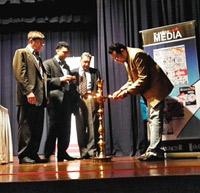
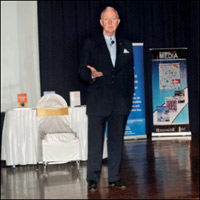
August 12, 2010, saw Planman Media and Business & Economy magazine play host to eminent corporate personalities of India, in a Panel Meet discussion, for Business & Economy magazine’s highly coveted annual issue – India’s Best B-Schools Special Issue 2010. The most unique element about the B&E B-school ranking is that in this particular ranking, the B-schools are ranked by renowned industry leaders (please refer to ‘List of 20 Panel Members’ section for the names of panelists). Considering the importance of the meet, four distinguished industry leaders – Dr. Wilfried Aulbur (CEO, Mercedes-Benz India), Mr. Michael Boneham (MD, Ford Motor Co. India), Mr. Naresh Gupta (MD, Adobe India) and Mr. Brian Tempest (Former CEO, Ranbaxy and presently, Independent Director, Religare Hichens Harrison) – sent their comments and discussions through the audio/visual format. The round-table discussion revolved about the parameters on which B-schools are judged today, and means by which such ranking can be made more transparent and just. Professor Arindam Chaudhuri, Editor-In-Chief of Planman Media expressed his views on how “faculty and course contents” are the two most important elements to deliver overall knowledge in B-schools. He also stressed upon a need for a constant focus on personality development and communication skills. Mr. Girish Vaidya. Former Director, Infosys Leadership Institute spoke about why B-Schools should be ranked on the basis of “curriculum, global exposure and cultural stability, along with the extent to which entrepreneurial programs” are encouraged. Mr. Dhiraj Mathur, Exec. Director, PwC gave a strong argument on why “a strong orientation towards ethics” is important for a B-school. While K. M. Nanaiah, MD, Pitney Bowes India, also highlighted the need for a “globalised curriculum and industry interface”, Mr. Sumeet Nair, Chairperson of Fashion Foundation of India justified the need for “encouraging an entrepreneurial zeal” amongst the B-school students. The event was a huge success and all the participants concluded that much more needs to be done to arrive at the ideal B-school of tomorrow.


Source : IIPM Editorial, 2012.
For More IIPM Info, Visit below mentioned IIPM articles.
 
IIPM : The B-School with a Human Face

Monday, September 10, 2012

M. R. Rao, CEO, SKS Microfinance Ltd.

Launched in 1998, SKS Microfinance is one of the fastest growing Micro Financial Institutions (MFIs) in the world, which has served more than 5 million women members in poor regions of India till date. Of course, the company has been in the news for the wrong reasons following the unceremonious exit of its ex-CEO Suresh Gurumani. Current CEO M. R. Rao talks about the company’s business model and challenges it faces: 

B&E: What is the maximum amount of loan that can be availed and repayment options available?
MR:
All members (clients) are eligible to borrow Rs.12,000 depending upon the activity which the member undertakes in the first year of joining SKS Group. From the second year onward, the loan size is increased by Rs.4,000. Loan repayments follow a weekly repayment schedule. All repayments and fresh disbursements happen during the centre meeting, which is held every week at every center. Our loans are given for a period of 50 weeks.

B&E: What kind of problems do you face while repayment of loans?
MR:
SKS enjoys a very strong repayment record and our NPAs are negligible. If a member is unable to repay an instalment, the other members in the group/center share the responsibility for the repayment. The few cases of defaults are usually due to migration or due to some natural calamity.

B&E: What are the rates of interest charged by SKS?
MR:
SKS works in 19 states. In Andhra Pradesh, Karnataka and Orissa, we charge a flat rate of interest at 12.5% and in rest of the states, the flat rate is set at 15% currently. In the newer states where we have started, our rates are a little higher at 15% flat and 26% diminishing. We also charge a loan cover fee of 1% that helps us offer insurance for the loan period.


Source : IIPM Editorial, 2012.
For More IIPM Info, Visit below mentioned IIPM articles.
 
IIPM : The B-School with a Human Face

Saturday, September 08, 2012

No more “Short Cuts”, please!

After growing at a red hot annualised rate of 5.8% in Q1 2010, Canada’s Economic growth has come down to just 2% in Q2, 2010. Canadian policymakers now need to look beyond the ‘short cuts’, be it interest rates or output, if they want the Economy to sustain its growth momentum.

Of the seven industrialised nations that comprise the G7, Canada clearly stands out when it comes to economic recovery from the recent recession. Reason: It not only expanded at an annual pace of 5.8%, but also recovered both the employment and real output losses that accrued over the troubled course, in just one year. No other G7 nation can make an equivalent claim.

However, the party seems to be over for now for this North American nation as the recent economic data out of Canada suggest that its economy might not hold on to the top slot anymore. After growing at a red hot annualised rate of 5.8% in Q1 2010, Canadian economic growth has come down to just 2% in Q2, 2010. While a healthy job market (employment growing at 2.1% yoy) and solid wage growth (4.8% yoy in Q2 2010) should continue to fuel domestic demand, there are several potential headwinds that needs to be avoided. So, with the benefits of the inventory swing (inventory rebuilding had accounted for over 33% of GDP growth in 2009) behind and the boost from government stimulus (over $60 billion in 2009 and 2010) fading, is Canada’s economic boom finally over?

Jay Bryson, Global Economist at Wells Fargo Securities tells B&E, “The strong pace of growth that Canada has been able to realise over the past year led the central bank to take back 75 bps of earlier rate reductions that it believed were no longer necessary. But some of the key factors that helped propel growth during the recovery are no longer providing much help. The consumer, who started out with a fairly decent balance sheet, has become more levered and spending growth has been spotty recently.”

In fact, it has been just one month since Bank of Canada’s (BoC) last rate decision (on September 8, 2010, BoC increased the overnight lending rate to 1%) and just over one week until the next one (perhaps indicating another rate hike), but the risks have already begun to play out in the Canadian economy. The latest employment report, released two days after the last decision, was (after adjustments) the worst since May 2009. As per the report, the average monthly employment gain was just 6,600 in Q3 2010, down from 75,530 in the April to June period.

Housing starts too fell to 1,86,000 units, down nearly 10% from the peak reached last April. Interestingly, in 2009, several people had rushed into the market so that they could take advantage of near zero short-term interest rates and as a result in the 11 months between January and December 2009, existing home sales skyrocketed by almost 66% and prices by more than 21%. But, since the start of 2010, one can clearly see that phenomenon reversing. While sales have corrected by more than 20%, prices too have softened by 3% (as of August 2010).


Source : IIPM Editorial, 2012.
For More IIPM Info, Visit below mentioned IIPM articles.
 
IIPM : The B-School with a Human Face

Tuesday, September 04, 2012

HERO & HONDA?: BREAK UP PLANS

Speculations abound on the probability of the Hero Honda JV heading for a sudden break up. B&E’s Pawan Chabra does a speed-check on the repercussions of such an event for both players

To both Honda and Hero’s credit, spokespersons from both groups have denied any such development repeatedly in the recent past. But industry analysts comment that’s not quite the case. It has been reported that the Hero Group has set up an SPV for buying Honda’s share and has also contacted a handful of PE players to pick up a stake in the company. However, there have been concerns on the valuations of the share of the company as it is expected that the share price of the company will fall once Honda moves out of the picture and the home-grown Hero group is facing difficulties in clutching a deal. At the current share price of `1,700, the valuation of Honda’s 26% stake comes close to `90 billion.

So what would Honda have to lose? The answer is quite straightforward – the maddeningly huge and extensive distribution, sales and service network that is one of the key differentiating factors for Hero Honda products. One has to note here that Honda has been separately operating in India with its 100% owned subsidiary Honda Motorcycles & Scooters India Limited (HMSI) since 2001. The company has gained ground in the scooter segment in no time with products like Activa, Eterno and Aviator and is also moving very aggressively into the motorcycle space.

“Honda is looking at the bigger picture here (by breaking up the JV, if that happens) and is eying the huge potential of the Indian two-wheeler industry,” said Vaishali Jajoo, auto analyst, Angel Broking. Not only will Honda have to compete with the market leader, the Hero group, but it will also not bank any share of profits from the JV, apart from foregoing royalty payments (in case Hero decides to have its own R&D). For the record, the Japanese auto major rakes in close to 2.5% of sales as royalty fees every year. It is to be mentioned here that the amount of royalty payment to Honda from the Hero Honda JV stood at `4.2 billion in fiscal 2010. In fact, it is expected to rise to around `5 billion in 2011. A report by IDFC Securities comments that after moving out of the JV, it would take at least 3-4 years for HMSI (Honda Motorcycle and Scooter India Ltd) to scale up to a level to challenge the two domestic market leaders. Our analysis is that given the huge odds among the minor evens, it appears impracticable for the duo to separate, at least for the short run. Differences of opinion over royalty payments can easily be sorted out, especially when the synergy between these two has been empirically evidenced and statistically proven. This time, staying married seems the better course...